Santo Domingo Cacalotepec (Rayela), Oaxaca – Community Context for Coffee Buyers
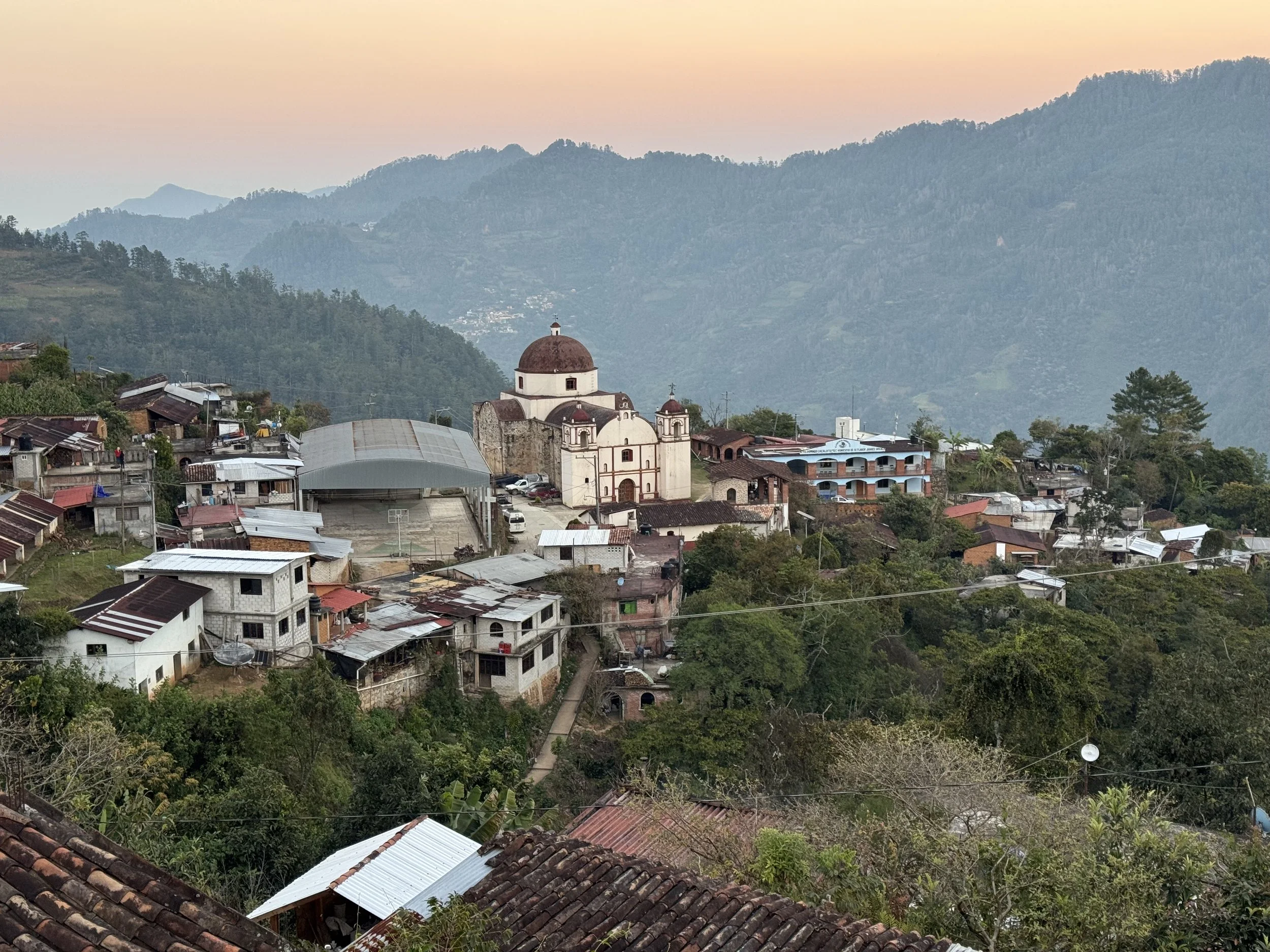
Geographic and Cultural Context
Santo Domingo Cacalotepec is a Zapotec community located in the Sierra Norte, also known as the Sierra Juárez, in Oaxaca, Mexico. In Zapotec, the community is known as Rayela, the original name used by local inhabitants to refer to their pueblo.
The continued use of the name Rayela reflects the persistence of the Zapotec language, identity and systems of self-governance in the region.
The population is primarily Zapotec, and livelihoods are based on small-scale agriculture. Coffee is one of the principal cash crops, cultivated on family-owned and communal plots, often on steep, mid-altitude terrain under shade trees.
Coffee Production Structure
Production is typically organised at household level, with labour shared among family members and neighbours, particularly during harvest periods.
Coffee farming in Rayela operates within a diversified livelihood system. Producers balance coffee cultivation with subsistence farming (maize and beans), childcare, elder care, seasonal migration and mandatory community service.
Coffee is therefore an important source of income, but it does not structure daily life year-round.
Governance: Administración por Usos y Costumbres
Community life in Rayela is structured through an autonomous governance system known as administración por usos y costumbres.
Under this system, political authority and community organisation are based on customary law rather than political parties. Leadership roles and community responsibilities — known as cargos — rotate among adult members of the community and are generally unpaid.
Fulfilling a cargo is both a social obligation and a marker of belonging.
The Impact of Governance on Coffee Production
For coffee buyers and roasters in the Global North, understanding Rayela’s governance system is essential.
Decisions concerning land use, communal infrastructure, water access, road maintenance and collective work days (tequio) directly affect coffee production, processing and producers’ ability to participate in markets.
Holding a cargo often requires regular attendance at meetings, travel to neighbouring towns or municipal centres, administrative work and coordination of communal labour.
During peak harvest periods, producers may need to fulfil cargo duties alongside harvesting and processing their own coffee. This reduces labour availability on farms and can directly affect picking schedules, fermentation monitoring, drying times and delivery logistics.
Coffee quality is therefore produced within a context of limited time, constrained cash flow and collective obligations that do not pause during the harvest season.
Collective Priorities and Market Realities
Coffee from Rayela is not simply an agricultural commodity. It is the outcome of a community-organised system of labour, responsibility and local governance.
Sourcing from Rayela requires recognising that coffee is produced within a collective governance system that prioritises community wellbeing over individual profit maximisation.
Long-term relationships, flexible timelines and pricing that reflects genuine labour constraints are more closely aligned with production realities in communities governed by usos y costumbres.
In this context, sourcing is not about intervention. It is about alignment — recognising that the coffee supply chain intersects with autonomous systems of governance that prioritise collective wellbeing alongside agricultural production.