How We Do Things: Our Coffee Supply Chain in Oaxaca (founder’s note)
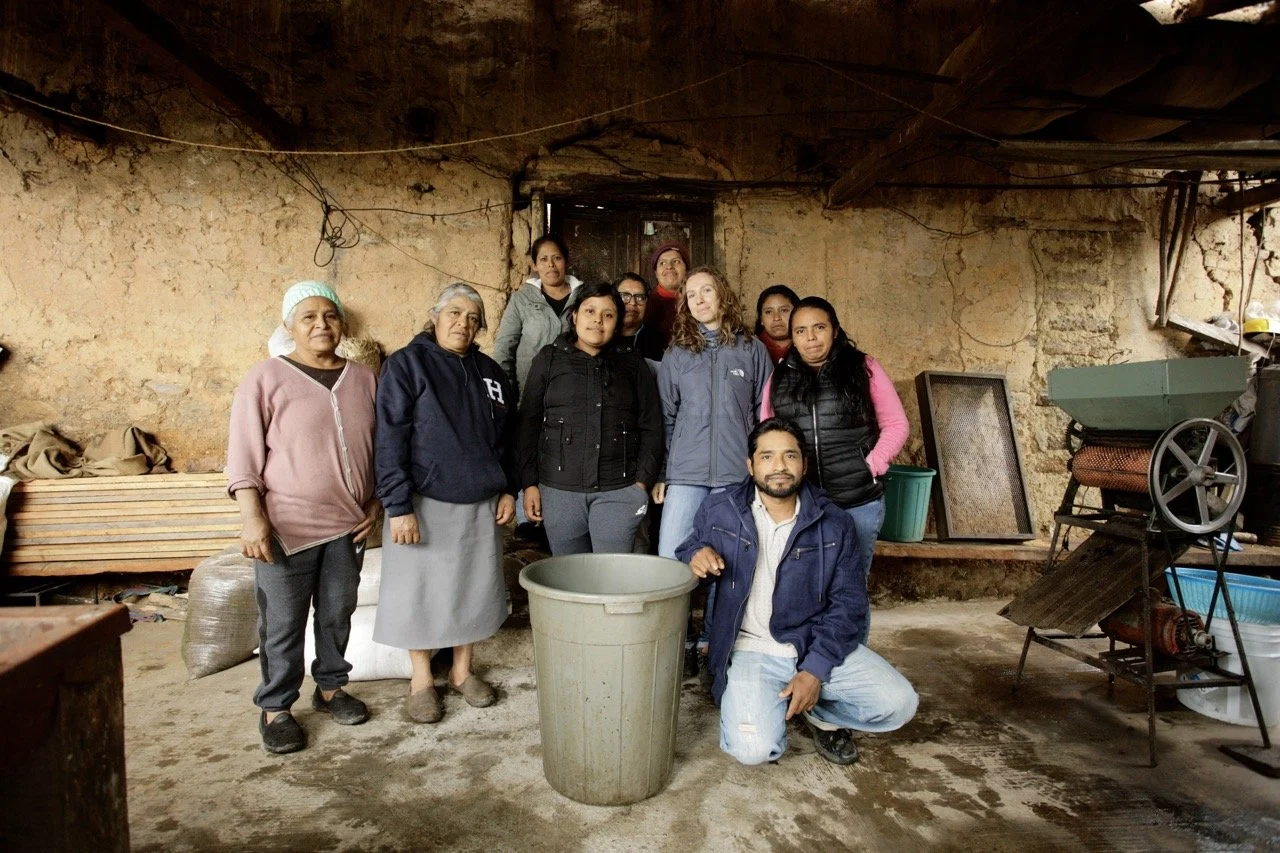
At Que Onda, the way we source coffee is quite simple, but it is also very intentional
The project grew out of relationships — not from a business plan or a strategy to build a coffee exporting-importing company. It started with spending time with producers, cupping together, learning about their farms, and slowly understanding the realities of growing coffee in southern Mexico.
Today our work in Mexico is centred in Oaxaca, a region where coffee is mostly grown by smallholder farmers, often on family plots high in the mountains. Many of these farms are relatively small, and coffee production is deeply connected to family life, local knowledge, and the rhythms of the community.
Building Relationships First
For me (Evie), sourcing coffee has never been about finding the “best lots” and moving them through a supply chain as quickly as possible. It has always been about building long-term relationships with producers and their families.
The coffees we export are the result of ongoing conversations — about harvest timing, processing methods, what resources we can use to improve quality, and what kind of coffees roasters are looking for, how we can make the process easier for everyone involved. Over time, those conversations turn into trust, and that trust allows us to experiment, improve quality, and plan future harvests together.
Two of the producers who are especially close to me are Rebeca Chavez Martinez and her husband Felipe Vega Altamirano. Over the years, our working relationship has grown into something much deeper than simply buying and selling coffee.
From the beginning, they have been incredibly open to new ideas and changes in processing. They trusted me enough to come and stay with them during harvest so we could work side by side, processing their coffees together and experimenting with different approaches. Those days were full of long hours, a lot of learning, and many conversations about coffee, farming, and the future of their work.
Experiences like this are what truly shape the way I think about sourcing coffee. When you spend time together during harvest, you begin to understand the effort, decisions, and risks that go into producing each lot.
Over time, that collaboration turned into a genuine friendship. Today, Rebeca has taken on an important role in her community and is now the encargada of the women producers group, supporting and organising other women producers in the area. Seeing this kind of leadership grow within the community is something that makes these relationships even more meaningful.
For me, this is what a supply chain should look like — not just transactions, but long-term relationships built on trust, shared work, and mutual support and respect.
The Reality of Smallholder Coffee Production
Coffee farming in Oaxaca is beautiful, but it is not easy.
Producers are dealing with a number of pressures — changing weather patterns, rising costs of production, labour shortages, and the ongoing challenge of volatile coffee prices. Many farms are run by families who have grown coffee for generations, yet the economic future of smallholder coffee farming is far from guaranteed.
In many communities, coffee production is also closely tied to local governance and collective decision-making. For example, in Santo Domingo Cacalotepec, community life is organised through the autonomous system of usos y costumbres, a traditional form of governance that shapes how responsibilities, leadership, and communal work are shared. I wrote more about this system and what it means for coffee producers in the community in this article: Santo Domingo Cacalotepec (Rayela), Oaxaca – Community Context for Coffee Buyers.
This is why transparency and long-term collaboration matter so much.
When supply chains become shorter and more direct, it becomes easier to build stability. Producers can plan ahead with more confidence, and roasters can know exactly where their coffee comes from and who produced it.
A Personal Interest: Going Back to the Basics of Processing
One area of coffee production that I’m particularly interested in is processing. During harvest, I often spend time with producers processing coffees and thinking about new ways to do things.
Sometimes this means going back to the basics — starting with careful selective harvesting and simple practices like floating the coffee to remove lower-density cherries. From there we look at washed processing, often using a double fermentation approach that many producers favour, as it makes the coffee easier to depulp.
Together we talk about the fundamentals of fermentation: how microorganisms metabolise sugars, how fermentation time affects flavour development, and why factors such as monitoring temperature are so important for achieving consistent results. These conversations are never about imposing new methods, but about understanding the principles behind the processes that producers are already using and exploring how small adjustments might improve quality. When producers feel comfortable with the basics, we can then move forward and experiment — if that’s something they are interested in.
Tasting the Coffees
The coffees we share through Que Onda come from these kinds of relationships, conversations, and collaborative work during harvest.
If you’re interested in tasting some of the coffees currently available from Oaxaca, feel free to get in touch at evie@queonda.coffee — I’m always happy to send samples and continue the conversation.